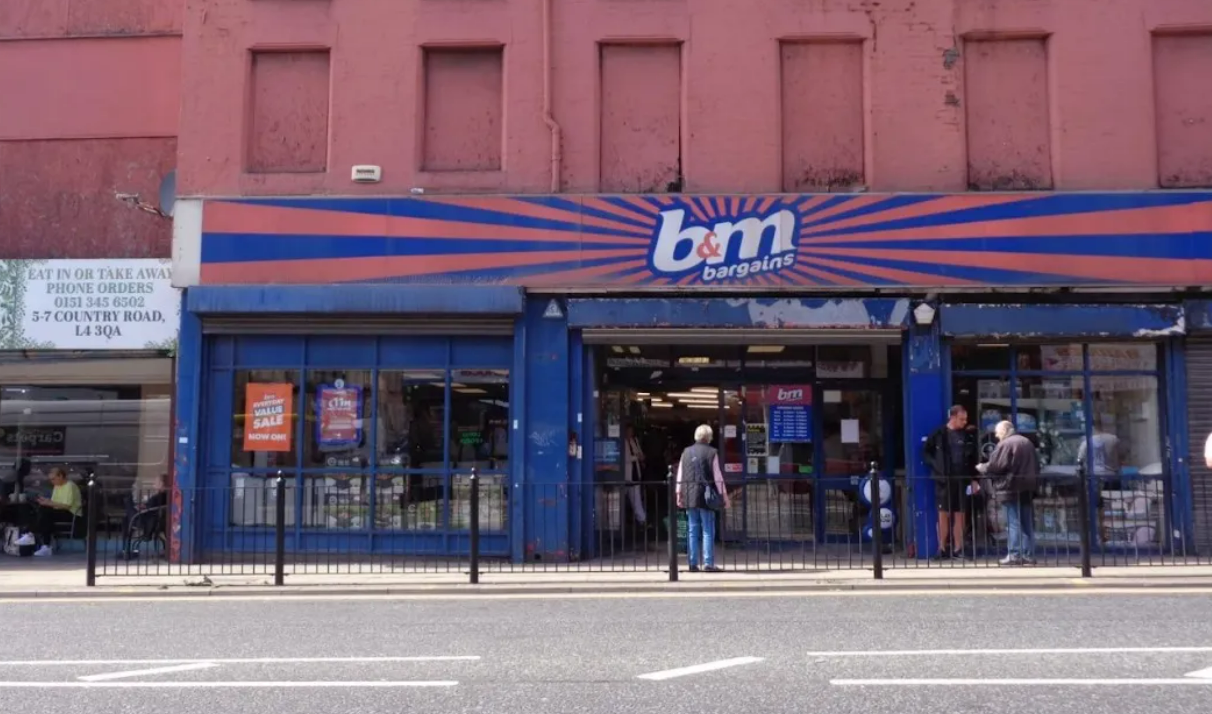
B&M is closing its 20,000 sq ft store on County Road in Walton, Liverpool on 6 November


The discount retail sector in the United Kingdom is undergoing a significant period of strategic realignment, a trend underscored by the announcement that B&M, one of the country’s leading variety store chains, will permanently close its 20,000 sq ft branch on County Road in Walton, Liverpool. The closure, scheduled for 6 November, marks a notable shift in the retailer’s footprint within the Merseyside region. As the company seeks to optimize its portfolio and enhance the overall customer experience, this decision reflects a broader corporate strategy focused on consolidation, operational efficiency, and the modernization of its retail estate.
The Scope of the Closure and Workforce Impact
The Walton facility has long served as a staple for local shoppers, providing a wide array of goods ranging from household essentials to seasonal items. However, the retail landscape in Liverpool is dense, and B&M currently operates several other locations within a short radius, including high-profile sites at Clayton Square in the city centre, the Bootle New Strand shopping centre, and The Rock retail park in Birkenhead.
A primary concern for any retail closure is the impact on the local workforce. According to official communications from B&M, the company has prioritized staff retention. A spokesperson for the retailer confirmed that all colleagues affected by the 6 November closure will be offered alternative roles at nearby stores. This commitment to internal redeployment is a common practice among large-scale retailers aiming to maintain institutional knowledge and minimize the social and economic disruption caused by store rationalization. By migrating staff to stores like Great Homer Street and Utting Avenue—both situated approximately one mile from the County Road site—the company intends to maintain its employment presence in the North Liverpool area.
Strategic Consolidation and Local Market Dynamics
The decision to shutter the Walton store is not merely a reaction to local market conditions but part of a wider strategic review. In the retail industry, "portfolio optimization" is a standard practice where companies evaluate the profitability, logistics, and long-term viability of individual stores. The County Road branch, while serving a specific catchment area, likely faced competition from B&M’s own newer or larger sites nearby.
The company’s focus on its Great Homer Street and Utting Avenue locations highlights a move toward larger, more versatile retail units. These locations feature integrated Garden Centres and offer a broader range of products under one roof, providing a more comprehensive shopping experience that aligns with the chain’s modern retail objectives. By directing foot traffic to these upgraded facilities, B&M is effectively concentrating its resources into stores that boast higher operational capabilities and a greater inventory capacity.
Contextualizing the Modern Retail Environment
The closure in Walton occurs against a backdrop of rapid transformation within the retail sector. Since the post-pandemic recovery, high street retailers have had to contend with rising operational costs, including energy prices, supply chain volatility, and wage inflation. Furthermore, the shift in consumer behavior—marked by a persistent move toward digital shopping and a preference for "one-stop-shop" destinations—has forced retailers to re-evaluate the utility of smaller, older units.
B&M’s move is consistent with its ongoing efforts to refine its brand identity. In late August, the company made headlines with the unveiling of its first "store of the future" in Wigan. The 24,449 sq ft branch at Worthington Way serves as a pilot for a new retail concept that integrates advanced technology, revised floor layouts, and enhanced in-store features. This pilot program represents a significant capital investment designed to test how physical stores can better compete in an increasingly digital world. The lessons learned from the Wigan experiment are expected to inform how B&M approaches its remaining store estate, potentially leading to further refurbishments or closures of legacy sites that do not align with this new, tech-enabled vision.
A Chronology of Strategic Shifts
To understand the trajectory of B&M’s current operations, one must look at the timeline of its recent expansion and consolidation:
- Early 2024: B&M continues its aggressive, yet selective, expansion, identifying high-growth areas while monitoring the performance of older urban stores.
- August 2026: The company launches its "store of the future" concept in Wigan, signaling a departure from traditional layouts in favor of a more streamlined, technologically integrated environment.
- October 2026: The official announcement regarding the closure of the County Road, Walton site is made, confirming the 6 November exit date.
- November 2026: The Walton store ceases trading, marking the conclusion of its service to the local community and the transfer of staff to neighboring branches.
This timeline illustrates a company that is actively pruning its portfolio to make room for innovation. By closing underperforming or redundant units, B&M frees up capital and operational capacity to invest in the flagship "store of the future" model.
Economic and Consumer Implications
For the residents of Walton, the loss of a local store is often felt keenly, particularly in neighborhoods where accessibility to affordable retail is vital. However, the proximity of the Great Homer Street and Utting Avenue branches—each just a mile away—suggests that the company’s intent is to migrate, rather than abandon, its local customer base.
From an economic perspective, the impact of such closures on local councils and retail ecosystems is nuanced. While the closure of a 20,000 sq ft unit leaves a void in the local commercial real estate market, it also creates an opportunity for new businesses or community-focused enterprises to occupy the space. Local authorities in Liverpool will likely monitor the future use of the County Road property to ensure it continues to contribute to the local economy.
Furthermore, the "B&M value" proposition—a cornerstone of the brand’s success—remains central to its messaging. The retailer continues to emphasize that despite the closure, customers will experience no disruption to the affordability and variety they expect. This messaging is crucial for maintaining brand loyalty during periods of transition.
Industry Analysis: The Future of the Variety Retail Model
B&M’s strategy reflects a broader trend among discount retailers. Companies like B&M, Home Bargains, and The Range have traditionally relied on rapid physical expansion to capture market share. As these markets reach a point of saturation, the focus naturally shifts from quantity of stores to the quality and efficiency of the existing estate.
The integration of technology, as seen in the Wigan trial, is expected to become a standard requirement for major retailers. Features such as improved inventory tracking, interactive kiosks, and optimized logistics allow retailers to operate with lower overheads while simultaneously improving the customer experience. For a brand like B&M, which thrives on the "treasure hunt" shopping experience, the challenge lies in balancing this modernization with the informal, bargain-hunting atmosphere that defines its success.
The closure on County Road is a microcosm of this industry-wide evolution. It is a reminder that even successful companies must constantly reassess their physical footprint to remain competitive. The decision is calculated, data-driven, and aimed at long-term sustainability rather than short-term gains.
Conclusion and Looking Ahead
As 6 November approaches, the focus for the local Walton community will be on the final days of the store’s operation. For B&M, the date marks the end of one chapter and the beginning of a more consolidated approach in North Liverpool.
The company remains clear in its objective: to remain the leading choice for value-conscious shoppers by focusing on stores that can offer the most comprehensive range of goods. With the successful launch of its "store of the future" model in Wigan, B&M has signaled that its next phase of growth will be defined by technological integration and the strategic allocation of resources. As the retail landscape continues to shift, the ability of companies like B&M to adapt, relocate, and modernize their physical presence will be the deciding factor in their continued market dominance.
While the Walton community may regret the loss of a familiar landmark, the transition of employees to neighboring branches and the proximity of alternative, larger-format stores suggests that the impact on local consumers will be minimized. Ultimately, the closure is a tactical move that fits into the broader, ongoing narrative of retail evolution in the United Kingdom—a narrative defined by the constant need to balance tradition with innovation, and local service with global efficiency.